What click-through rate can and cannot tell you
Use CTR to measure response to an impression.
The scenario
An ad records 240 clicks and 12,000 impressions. A variation earns 360 clicks on the same number of impressions but fewer qualified leads.
CTR rose from 2% to 3%. That means the second version earned more clicks per impression; it did not necessarily attract better prospects.
Apply it to your own work
Confirm the click type, then pair CTR with post-click conversion and lead quality. Compare similar devices and placements.
What to watch for
Some reports include clicks that do not lead to your site. Use link-click CTR when your decision concerns outbound traffic.
Connect the click to what followed
Create a table with impressions, link clicks, landing visits, qualified leads, and spend. A higher CTR accompanied by fewer landing visits can point to slow loads, accidental interactions, or a difference in click definitions.
Calculate qualified leads per 1,000 impressions for each creative. That view preserves the exposure denominator while showing whether the extra attention reached a useful outcome. Inspect click cost and lead quality before changing budget.
Try a related tool
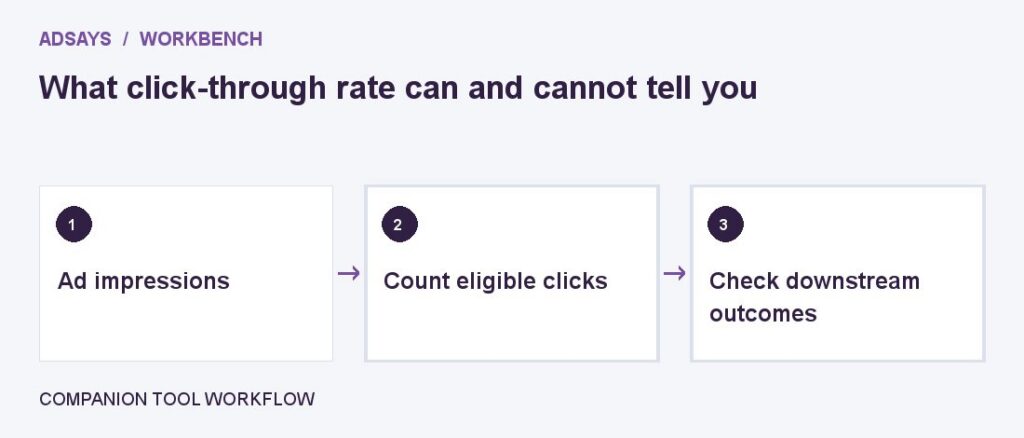
Measure clicks per impression. Use the same click type, placement scope, and date range across comparisons.