Build a funnel that handles repeat visits
Choose where steps can span sessions and time.
The scenario
A shopper views a product Monday, adds it to a cart Wednesday, and buys Friday.
A one-session funnel loses the path; a seven-day user funnel can include it when the data supports consistent identity.
Apply it to your own work
Define ordered steps, time window, and open versus closed entry rules. Run both a session funnel and a user funnel if the decision concerns different behavior.
What to watch for
Cross-device and unconsented visits can break observed paths. State what identity and coverage the funnel actually has.
Choose the clock that reflects the decision
Use a session view to find problems in a single visit and a user view to estimate paths that span visits. Test a path with a repeat product view and an early purchase so you know how the funnel handles optional and repeated steps.
Report counts at each stage and the share of people with observable identity where possible. If a long window makes unrelated repeat purchases look connected, show a shorter window and explain why both are relevant.
Try a related tool
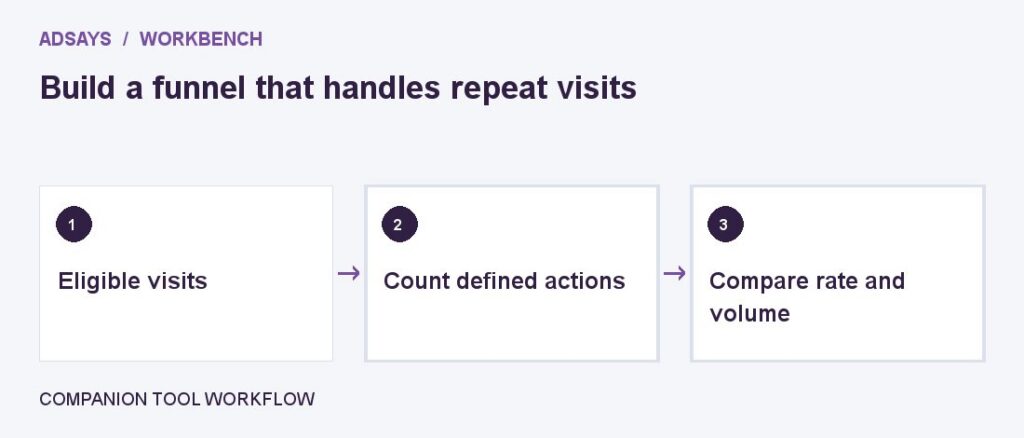
Find the share of eligible visits that completed a defined action. Count at most one conversion per visit for this calculation.