A negative keyword audit for paid search
Remove irrelevant traffic without blocking valuable searches.
The scenario
A business selling accounting software sees free templates and bookkeeping job searches consume $170 of a $750 week.
The irrelevant clusters represent 22.7% of spend. Blocking whole words such as accounting would also block core demand; start with the narrow unwanted meanings.
Apply it to your own work
Export search terms with spend and outcomes. Assign each term an intent label, add narrowly scoped negatives, then check a list of valuable queries for conflicts before saving.
What to watch for
Some searches never appear in a report. The audit covers visible terms and cannot prove that all remaining traffic is relevant.
Build a blocked-query log
Give each proposed negative a row with the exact query, intent, spend, campaign, and the reason to block it. Create a short set of valuable near matches to check against every change. For example, block a job-search phrase after reviewing employment terms separately from terms about hiring a bookkeeping service.
After release, compare qualified leads and lost spend against a comparable period. A negative audit works when it reduces irrelevant costs without removing demand you can serve. Review any sharp decline in a valuable ad group before adding more negatives.
Try a related tool
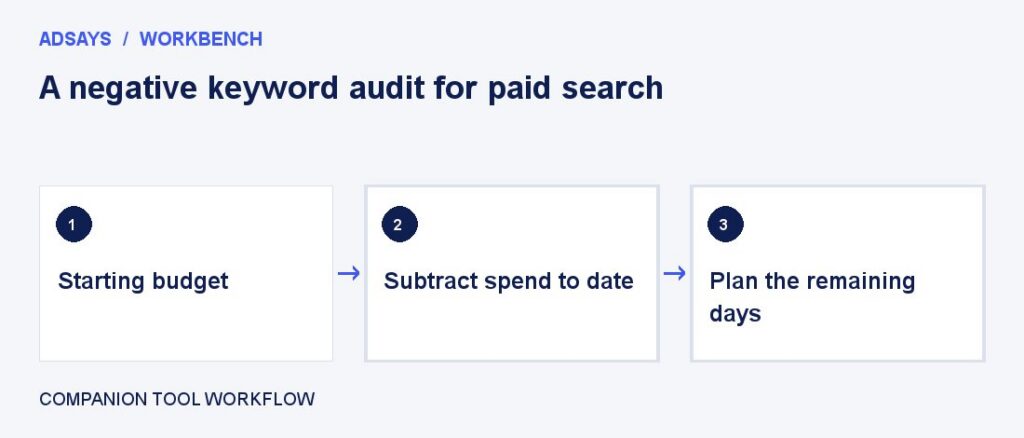
Divide remaining spend by the days left in a campaign. Adjust the daily figure for changes in expected demand.
Google Ads: find negative keywords in the search terms report