Compare conversion and contribution by discount tier
Avoid choosing the largest discount simply because it sells more.
The scenario
A 10% discount generates 120 orders at $24 contribution each. A 20% discount generates 150 at $17.
Total contribution is $2,880 versus $2,550. The deeper discount increases order count but reduces contribution in this scenario.
Apply it to your own work
Use matched or randomized cohorts where possible. Reconcile refunds and include downstream repeat value only when supported by data.
What to watch for
Capacity and inventory constraints may make high volume costly. Keep total contribution and operational load visible together.
Set a fair comparison window
Compare discount tiers on similar products and traffic. If one promotion runs on a holiday weekend and another runs during normal weekdays, record the difference before attributing the result to price.
Use net contribution after returns and variable fulfillment, and show the total number of orders beside it. A deeper discount may still help clear stock or reduce carrying costs, but name that objective and evaluate it separately.
Try a related tool
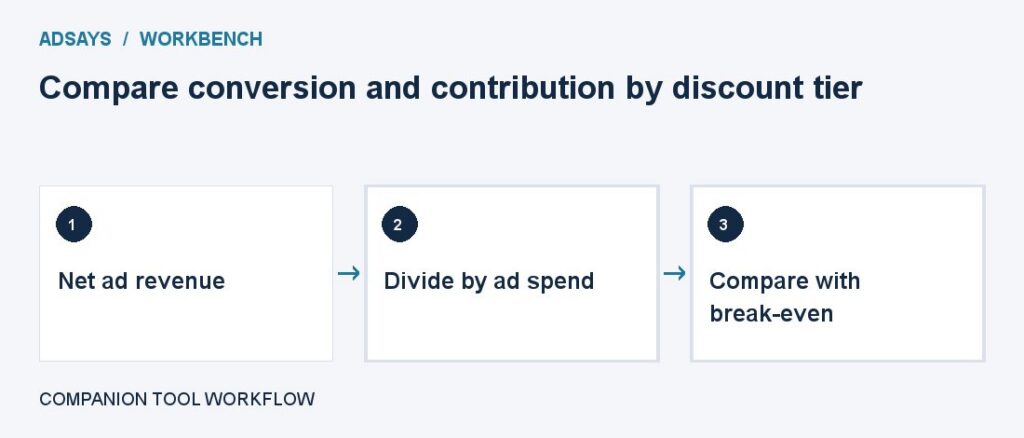
Compare revenue per advertising dollar with the return needed to cover ad spend. Enter net revenue and contribution margin before ads.