Use a decision log to improve growth planning
Make it easier to revisit assumptions when results change.
Write the decision in a reusable format
Record what will change, who owns it, the expected outcome, and the date to review. Add the evidence and assumptions, such as a $40 target CPA and a 25% close rate. Put the stop or reversal condition in the same record.
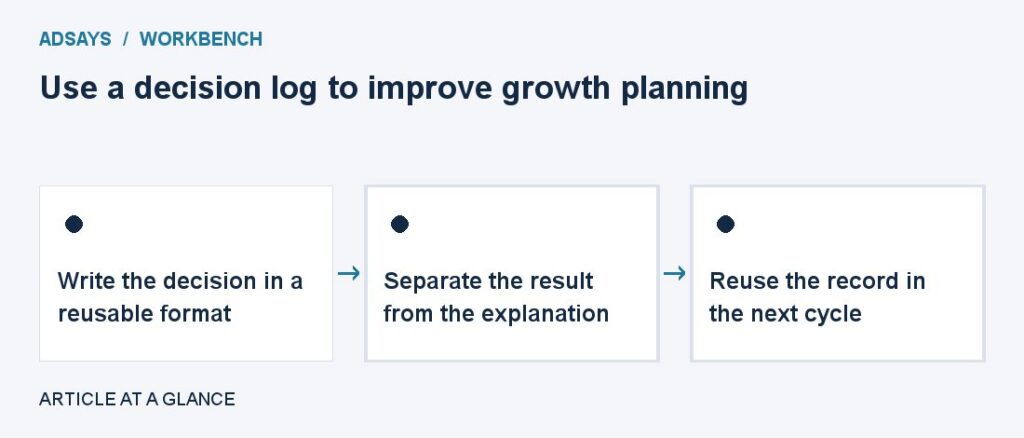
Separate the result from the explanation
At review, compare actual and expected values. If results differ, list plausible causes and the evidence needed to distinguish them. Avoid rewriting the original assumption after seeing the outcome.
Reuse the record in the next cycle
Carry forward findings that apply to similar conditions and flag where the context changed. Keep incomplete tests visible. A decision log is useful when it prevents repeating a weak test or helps the team act faster under a similar constraint.
Try a related tool
Divide remaining spend by the days left in a campaign. Adjust the daily figure for changes in expected demand.