How to allocate a small test budget
Size a test around an answer your business can use.
The scenario
An app can spare $900 for a test and expects qualified signups to cost about $30.
The budget buys roughly 30 outcomes in the planning scenario. Spreading it across six ideas leaves about five outcomes per idea, so a two-cell comparison is easier to interpret.
Apply it to your own work
Write one hypothesis and estimate outcomes per arm at conservative cost. Decide in advance what evidence would justify a second round or a stop.
What to watch for
The scenario is a forecast. A tiny test can reveal tracking or offer issues without proving that one ad is statistically better.
Budget for one decision at a time
At $30 per qualified signup, a $900 budget might support about 30 signups. If you reserve $150 for measurement or corrections, the working budget implies 25. Decide whether that supports the choice you need to make or only reveals major failures.
Write a minimum useful difference and a fallback decision. If neither arm is clearly better, retain the less costly or easier-to-operate version while gathering more data. Keep the test balanced enough to interpret exposure differences.
Try a related tool
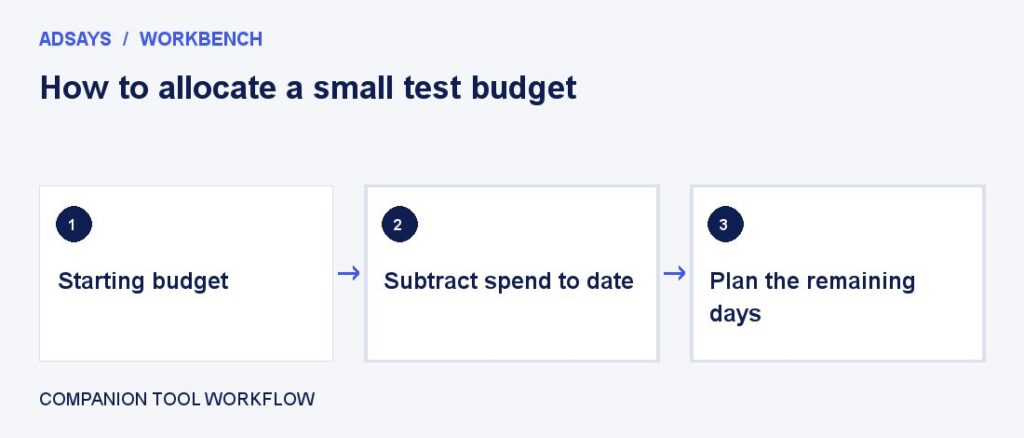
Divide remaining spend by the days left in a campaign. Adjust the daily figure for changes in expected demand.