Understand affiliate sub-IDs
Measure individual placements without sharing visitor data.
The scenario
A guide has one link in a comparison table and another near a setup walkthrough.
Use identifiers such as table and setup with an article slug. Separate placement data can show whether a link receives attention or actually earns.
Apply it to your own work
Define a short allowed naming vocabulary and use the network's parameter format. Click through test links and confirm that the identifiers appear in permitted reports.
What to watch for
Do not put emails, names, or CRM IDs in tracking parameters. Redirect logs and outside services may receive the full URL.
Make the identifier useful in exports
Start with stable values such as pricing_table and setup_walkthrough. Record the page separately if the network allows a second approved field. Use the same vocabulary across posts so an export can group equivalent placements.
Check the report using one permitted test per placement. If the tool truncates IDs, shorten them before deploying across the site. Do not infer an individual reader’s behavior from a placement identifier or store private customer data in it.
Try a related tool
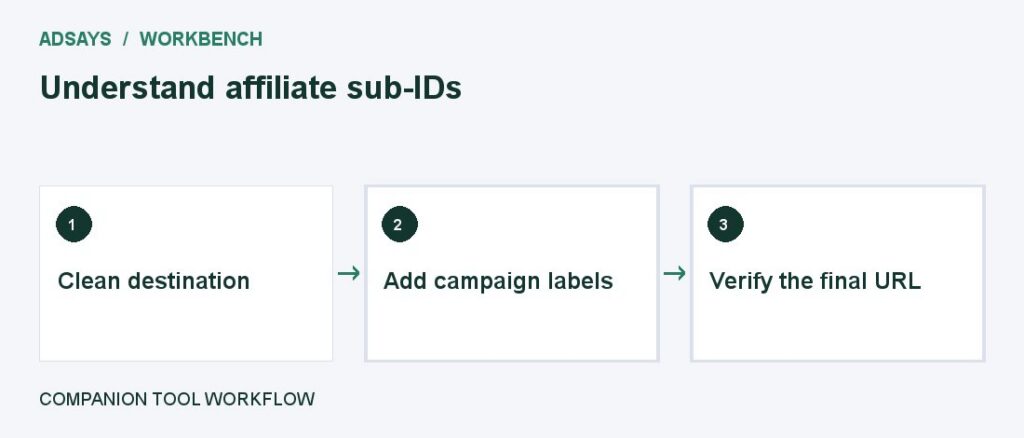
Add UTM labels to a destination. Use a consistent naming convention and avoid personal information in URLs.