Budget pacing without end-of-month surprises
Use remaining spend and calendar shape to set a realistic pace.
The scenario
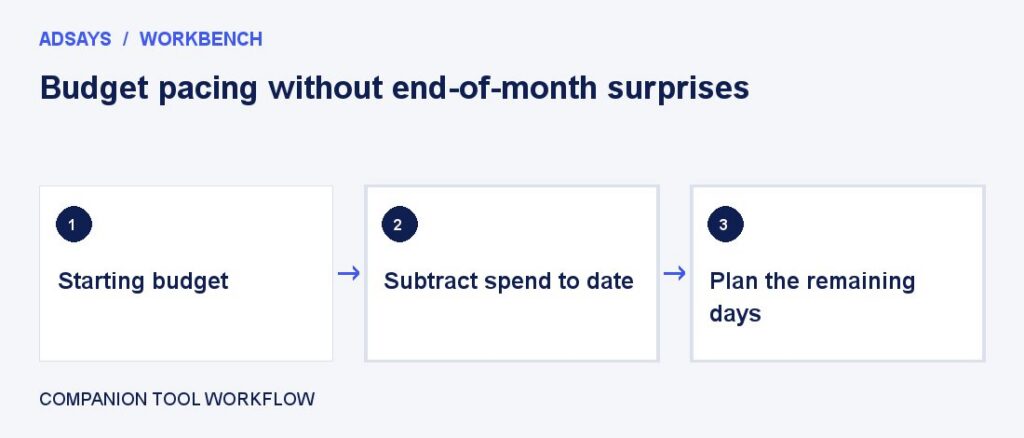
A $12,000 monthly budget has spent $6,300 through day 18 of a 30-day month.
The remaining $5,700 supports $475 per day on average. If six remaining days are higher demand, a $550 strong-day plan leaves $400 per lower-demand day.
Apply it to your own work
Build a calendar with promotions, staffing, and weekday patterns. Forecast at the account level and reconcile actual spend with billed totals before reallocating.
Build a catch-up rule
If the first planned $550 day spends only $430, you are $120 below that day’s plan. Before dividing it over the remaining days, decide whether the demand was missing or delivery was blocked. Only the latter suggests a fix to delivery.
Add a forecast column and an actual column. At each review, reforecast from the remaining spend, then explain any change in expected demand or staffing next to the date.
What to watch for
Platform daily budgets can vary from actual day-level spend. Treat your pacing figure as an operating target and check platform billing controls separately.
Keep a forecast that can survive the week
Reserve budget for known promotions or contract commitments before dividing the rest across days. If $1,200 of the $5,700 is reserved for two event days, the other ten days have $450 each on average.
Track planned, actual, and remaining spend in the same sheet. When there is a gap, note the cause and the next decision. If a holiday underdelivers because staff are unavailable, carrying the whole shortfall into another low-capacity day only moves the problem.
Try a related tool
Divide remaining spend by the days left in a campaign. Adjust the daily figure for changes in expected demand.