Offline conversion tracking for lead campaigns
Bring won sales back into the measurement loop.
The scenario
A training company receives 100 forms but sells only nine seats after its sales team follows up.
If one source delivers 40 forms and six seats, its form share is 40% but its seat share is two-thirds. The closer outcome changes the budget conversation.
Apply it to your own work
Store permitted click identifiers and timestamps with the lead. Deduplicate and map milestones such as qualified, attended, and won. Test a known record end to end before using imports for bidding.
What to watch for
A pipeline with inconsistent CRM updates produces biased training signals. Agree on ownership and update timing with sales.
Verify one test conversion end to end
Create a permitted test lead with a known click identifier and record its original event time. Move it through the agreed milestones and verify that each export uses a stable identifier and only sends the intended outcome once.
Compare the CRM count with accepted and rejected uploads in the ad platform. If an upload is accepted but the event does not appear in your report, check click-date versus conversion-date reporting and any attribution eligibility. Keep customer data out of free-form fields.
Try a related tool
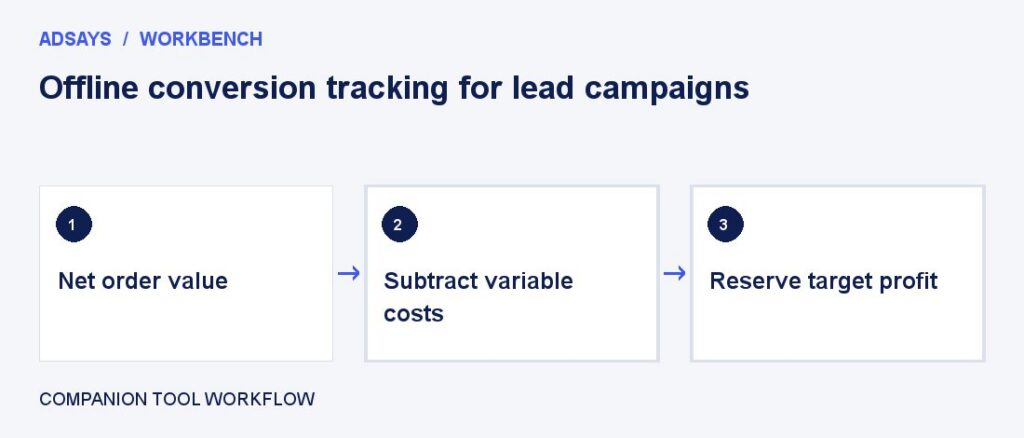
Estimate what you can pay to acquire an order while reserving a desired contribution. Use consistent per-order inputs.